
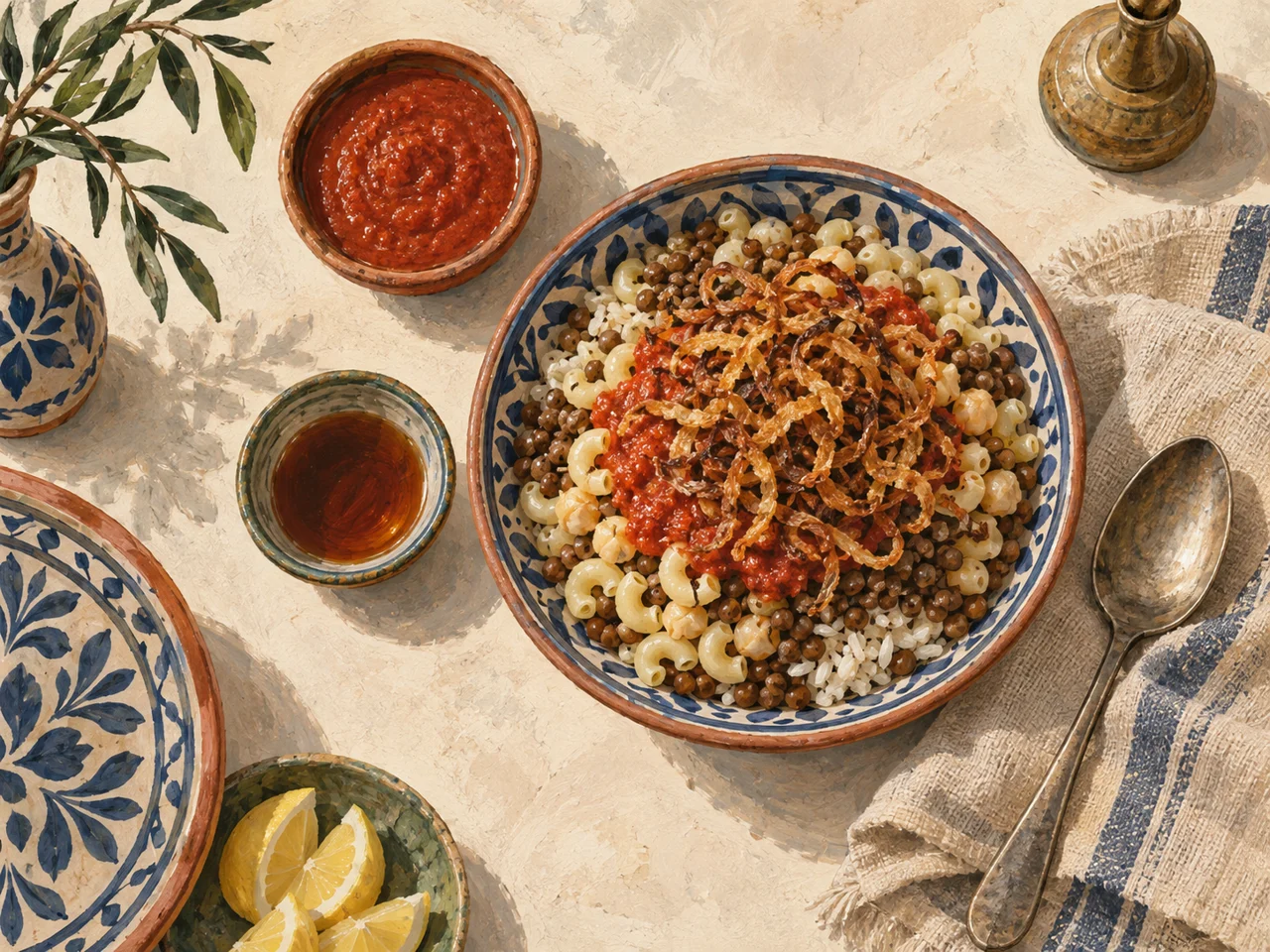
Original editorial illustration of koshary and accompaniments; not a photograph of a particular kitchen.
Koshary rewards looking before mixing. A bowl brings together rice, lentils and pasta, with chickpeas, tomato sauce and fried onions among its familiar companions. Its character lies in the meeting of textures as much as in any single ingredient.
The spelling varies in English: koshary, koshari and kushari can refer to the same dish. A change in transliteration is not, by itself, a change in the recipe.
Separate parts, one bowl
Think of the dish as an assembly. Soft grains and pulses create the base; pasta offers another shape and bite. Sauce brings moisture and acidity, while onions add a crisp finish. Garlic-vinegar and chilli accompaniments let the eater adjust the balance.
This is a guide to recognizing the dish, rather than a standardized recipe. Proportions, preparation and accompaniments differ. If you cook it, keep each component’s texture in mind before deciding how much to combine.
A daily practice, not only a dish
UNESCO inscribed “Koshary, daily life dish and practices associated with it” on its Representative List of the Intangible Cultural Heritage of Humanity in 2025. The wording is helpful: it makes space for preparation and shared practices, beyond the ingredients in the bowl.
That wider lens can guide a reader without turning every meal into a heritage lesson. Who prepares the components? What arrives separately? When is the sauce added? Questions about the practical sequence often reveal more than a search for one definitive version.
Notice, then ask
If you are unfamiliar with an accompaniment, ask what it is before pouring it over the whole bowl. Taste a little first. This is an ordinary way to learn a food, with room for personal preferences and different levels of heat.
Do not infer dietary suitability solely from a photograph or the dish’s name. Ingredients, cooking methods and cross-contact depend on the kitchen. Ask directly when a dietary requirement matters.
A food notebook in four lines
- Texture: what stays distinct after mixing?
- Balance: what changes when the sauce is added?
- Sequence: which elements arrive separately?
- Language: what name does the person serving it use?
A meal can be a language lesson without becoming an exercise for everyone around the table. Ask a small question, listen to the answer, and leave room to enjoy lunch.
Explore more on the Food & Daily Life shelf.
Source
UNESCO: Koshary, daily life dish and practices associated with it. Image: original editorial illustration, not a photograph of a particular restaurant’s dish.